NeighborNook
Helping people feel more connected to their new location
Role
UX / UI Designer
UX Researcher
Product Type
Responsive Website
Category
Social & Lifestyle
The Problem
Individuals moving to a new location may have a difficult time transitioning and thriving in an unknown environment. This could be due to unfamiliar surroundings, loss of social network, challenges of establishing new routines, finding a support system, or connecting to their new location.
The Solution
Create a website that offers local resources and social events for people who have recently moved to a new location to help to feel supported and build connection.
UX Process: Design Thinking

For this project, I used 5 stages of design thinking to explore an iterative, human-centered approach:
Empathize: Understand user behavior through research
Define: Identify their needs by synthesizing research findings
Ideate: Generate creative solutions to help address those needs
Prototype: Create wireframes and mockups of possible solutions
Test: Gather feedback about whether those ideas are useful and desirable
Empathize
Through research, I was seeking to understand the current experience of moving to a new location, and uncover what the challenges and opportunities are to help offer services or resources that could be beneficial when relocating to a brand new community.
Method #1: User Interviews
Five user interviews were conducted to gain insights about personal experiences around moving to a new location. This helped to better understand the problem space around how to better adapt post-move. The participants moved either solo or with family, and relocated for either career/school, relationship, or just seeking new opportunities.
User Pain Points
Basic things, such as finding health providers, grocery stores, changing insurance, etc.
Finding a social network can be hard, especially forming deeper and more meaningful friendships.
Learning a whole new neighborhood and adjusting quickly can be very overwhelming.
“Trying to find people in my current life stage can be challenging.”
User Opportunities
Try learning about neighborhoods ahead of time or gather feedback from others who are familiar.
Seek various ways to expand your network, through other friends or family, hobbies, work, or events. Use apps or social media.
People want information about local events or resources or ways to engage in the community.
“Explore different neighborhoods, do the non-tourist stuff, to get to know a location better.”
Method #2: Competitor Analysis
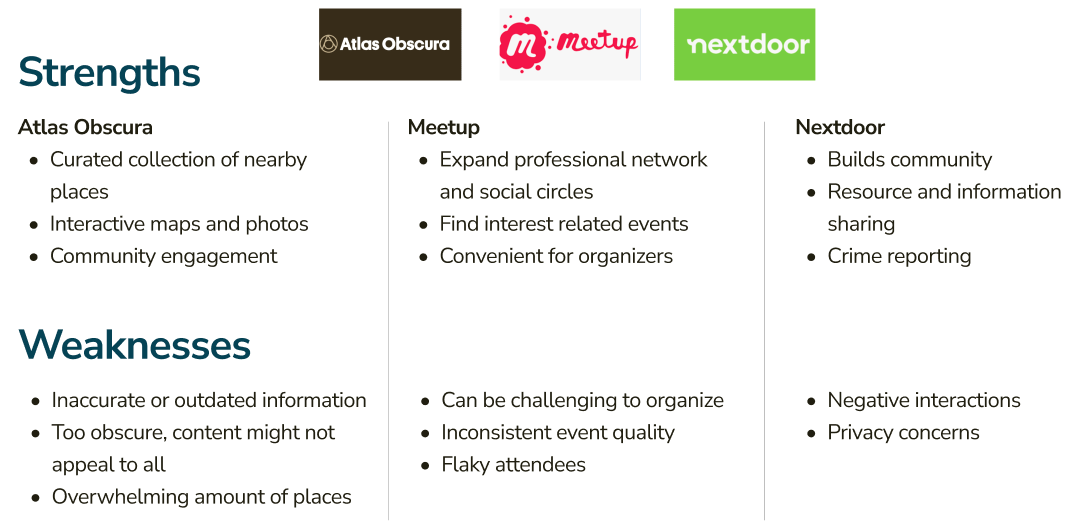
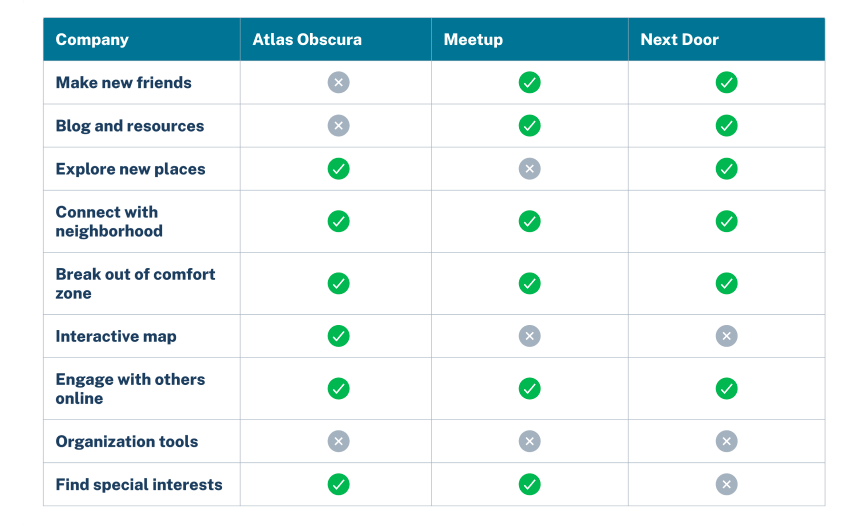
Various websites or apps were compared to show features, strengths, and weaknesses to determine what solutions are currently available to users.
Affinity Mapping
Key Observations:
It seems that knowing about key neighborhood resources and establishing a support system early on is helpful for adapting quickly.
Once feeling settled, it is important to explore and push oneself out of their comfort zone to find hobbies, events, and amenities where they can begin to form deeper friendships and find their identity.
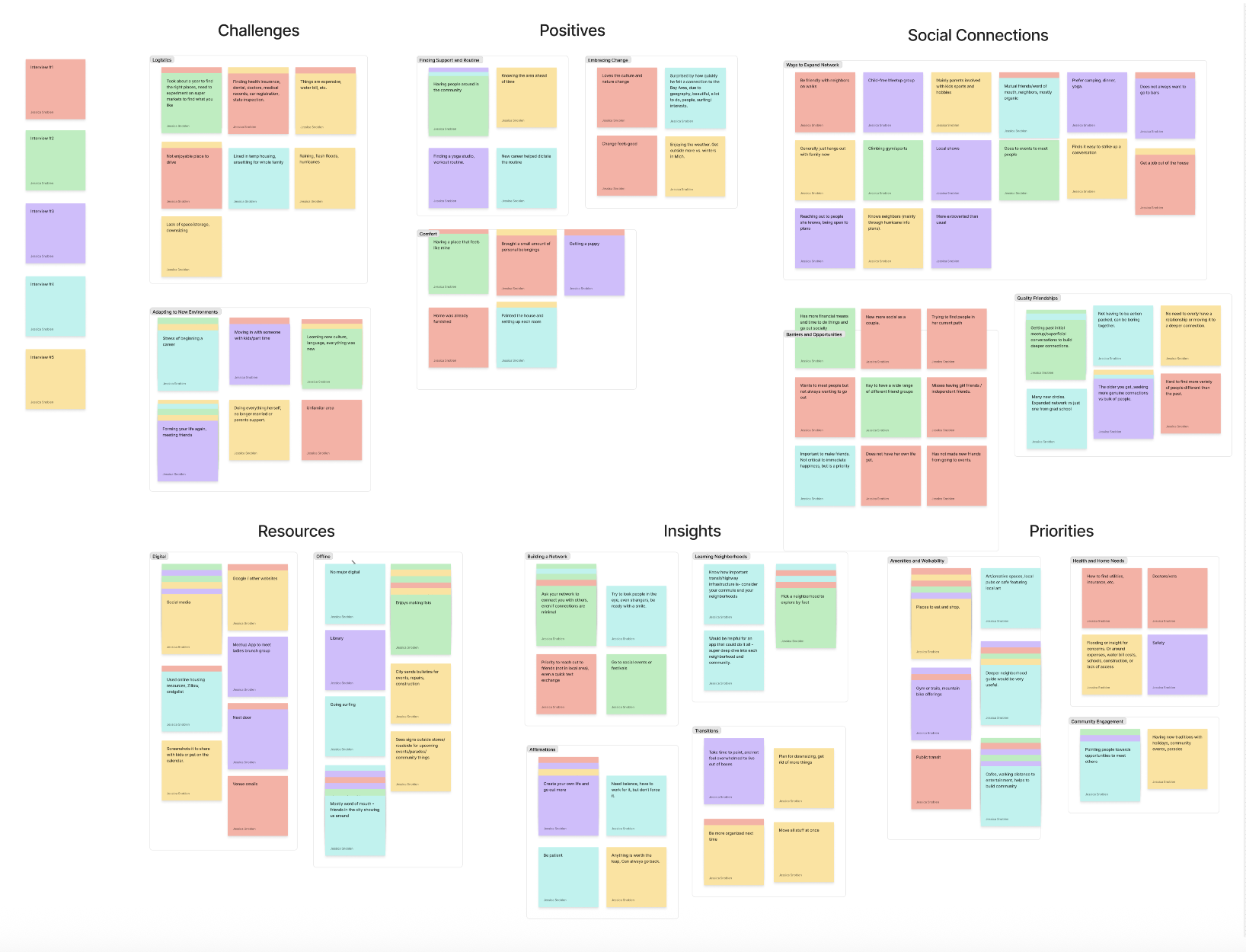
Recap: The research showed that successfully adapting to a new community depends on gaining early access to key neighborhood resources and establishing a support system, followed by actively stepping outside one's comfort zone to pursue hobbies and social events that foster deeper friendships and a sense of identity.
Define
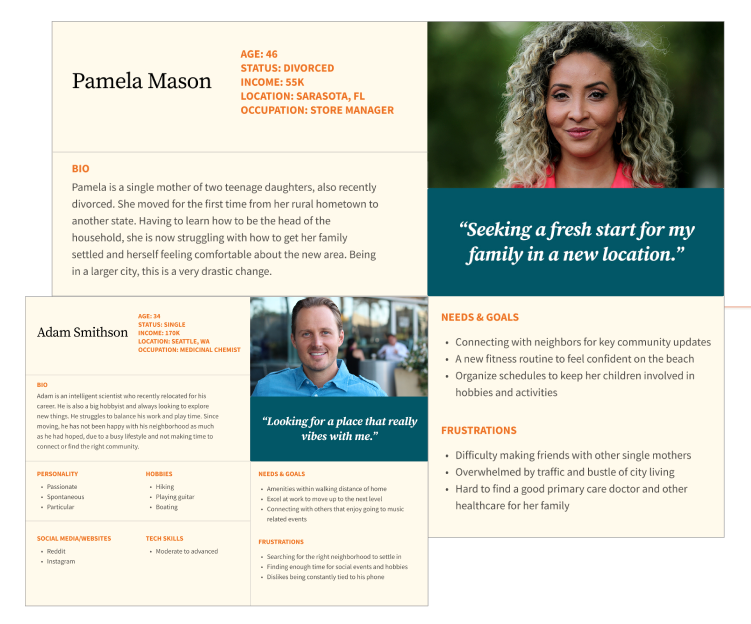
Personas
The research allowed me to synthesize user insights into key personas representing my target market.
Point of View Statement and How Might We?
From here, I created a Point of View (POV) statement to define the exact problem to solve, and brainstorm various How Might We (HMW) questions to solve it.
POV statement: I would like to explore ways to help people who have recently moved connect with others to feel supported and engaged in their community.
How might we connect new movers with others that share similar interests in hobbies, activities, or fitness routines?
How might we create recurring gatherings for new movers to connect with others to form a deeper level of friendship?
How might we offer insights from others already acclimated to the location to help guide newcomers?
Recap: The define stage focused on uncovering ways to ease the relocation transition by connecting newcomers through shared hobbies, establishing recurring social gatherings to foster deeper friendships, and leveraging the insights of established residents to guide them.
Ideate
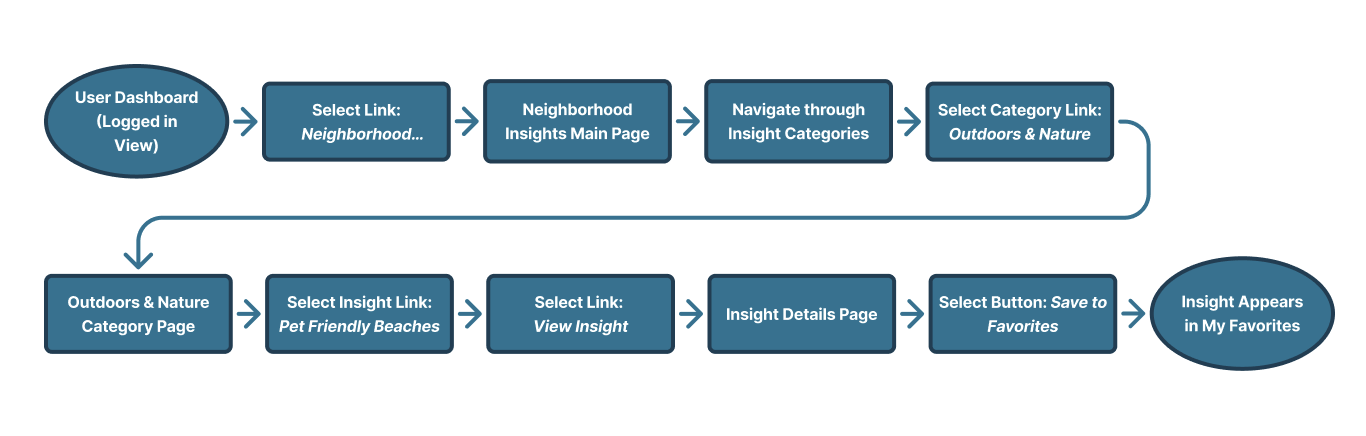
User Flows
Various task flows were developed to inform the design and ensure the website was easy to navigate with no errors or dead-ends.
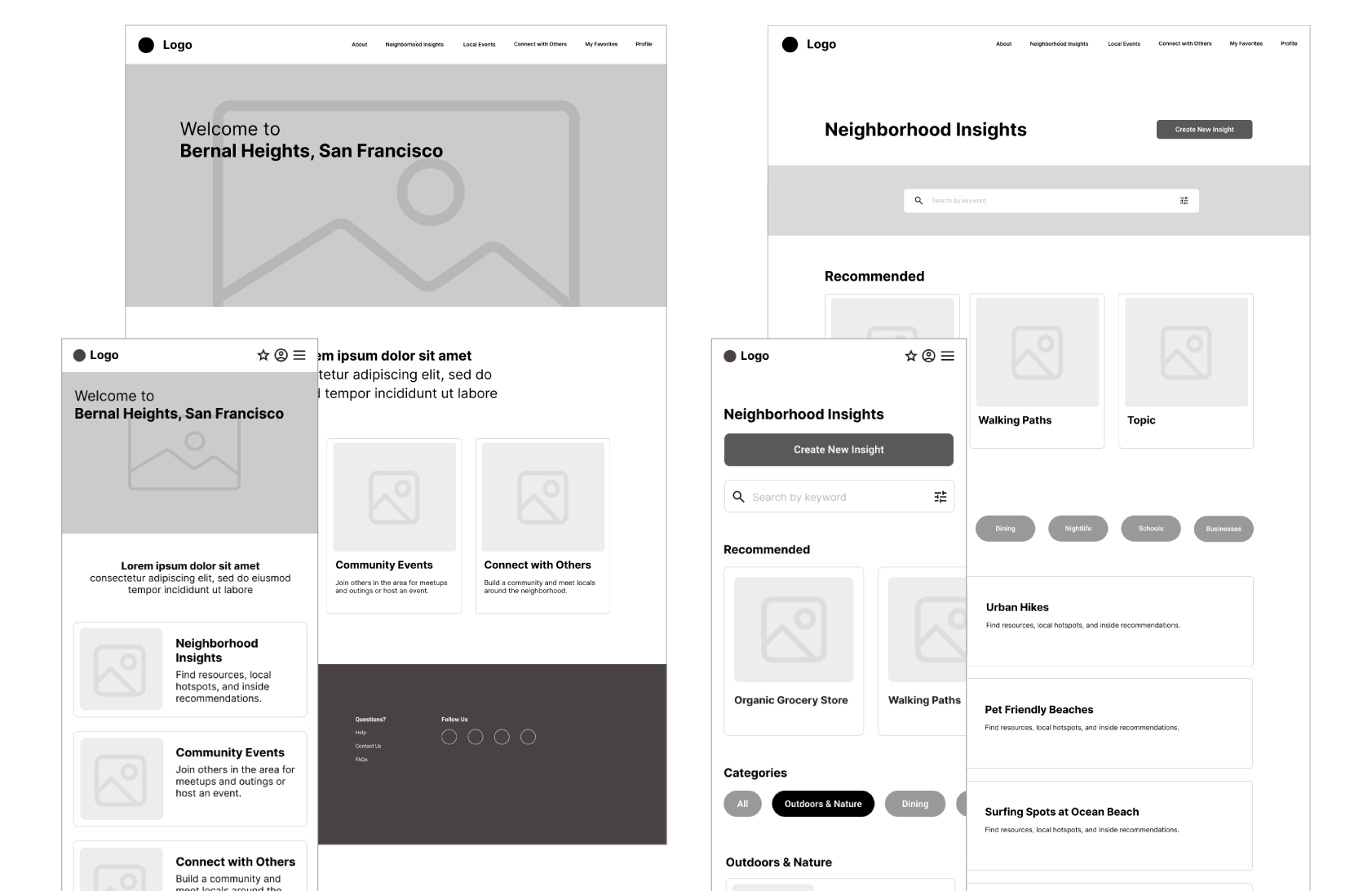
Sketches and Digital Wireframes
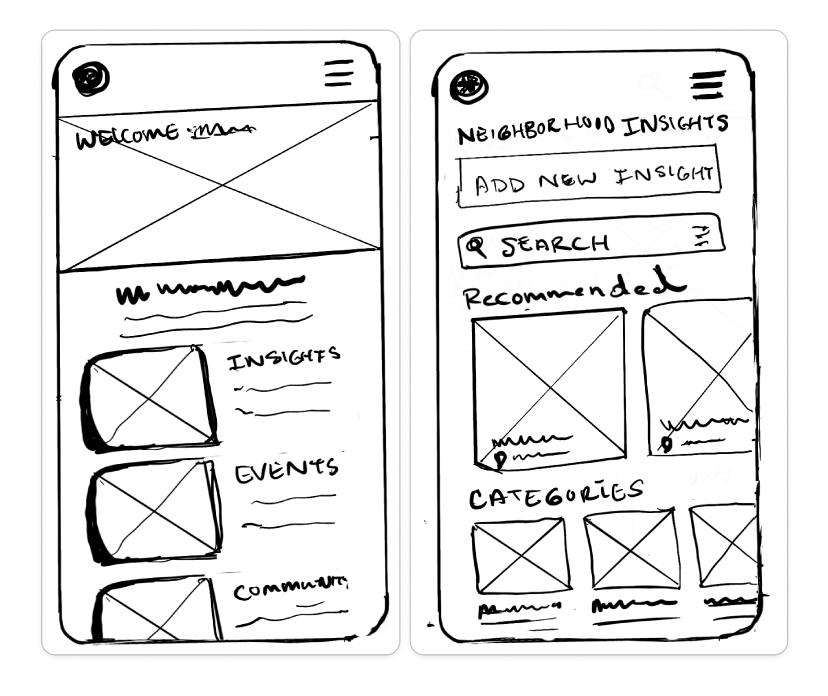
From there, sketches and low-fidelity digital wireframes were developed to map out each task flow.
Branding & UI Components
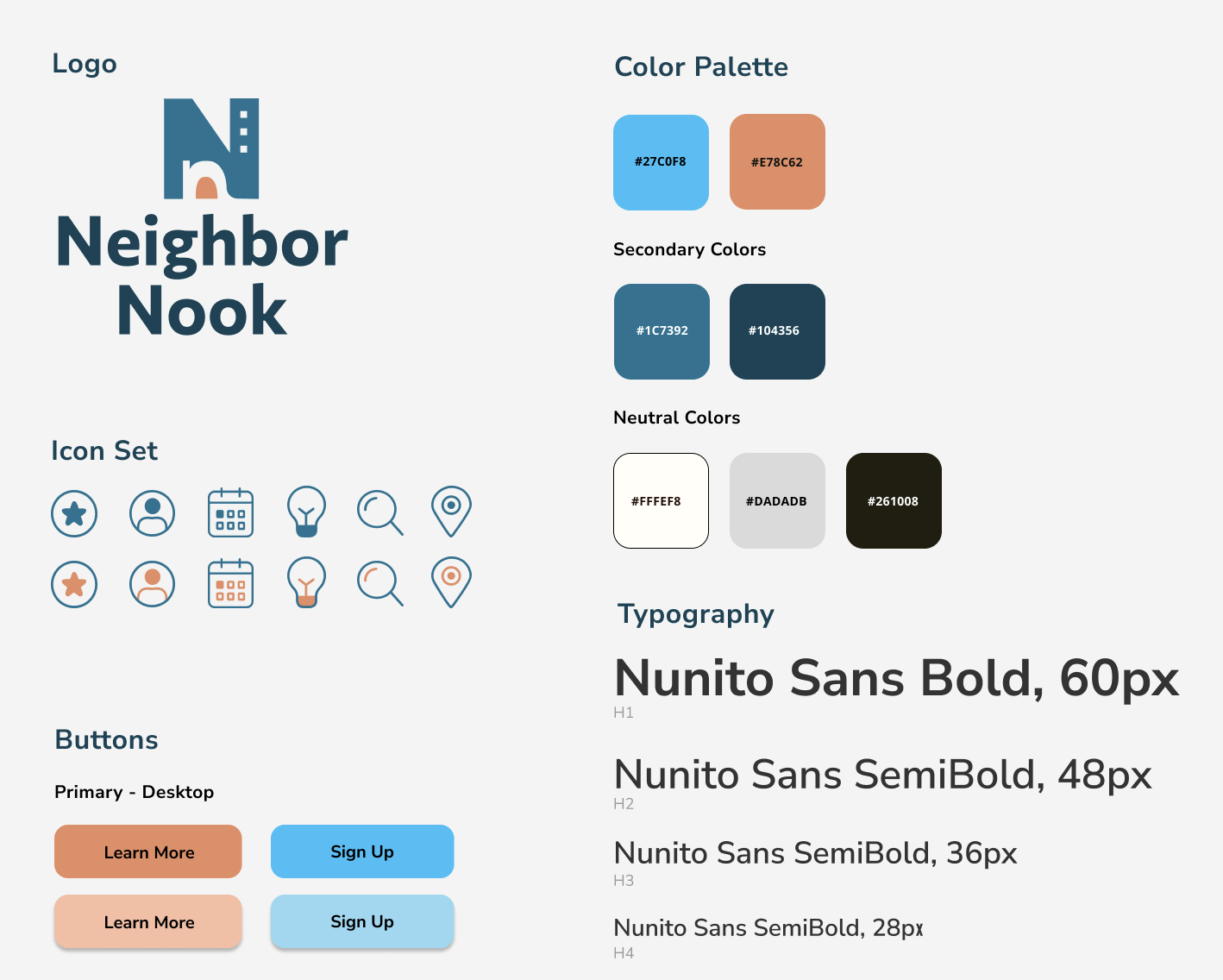
The brand, color palettes, and UI components were created to help convey the comfortable and calm, yet engaging and energizing feeling of the NeighborNook website.
Hi-Fidelity Designs
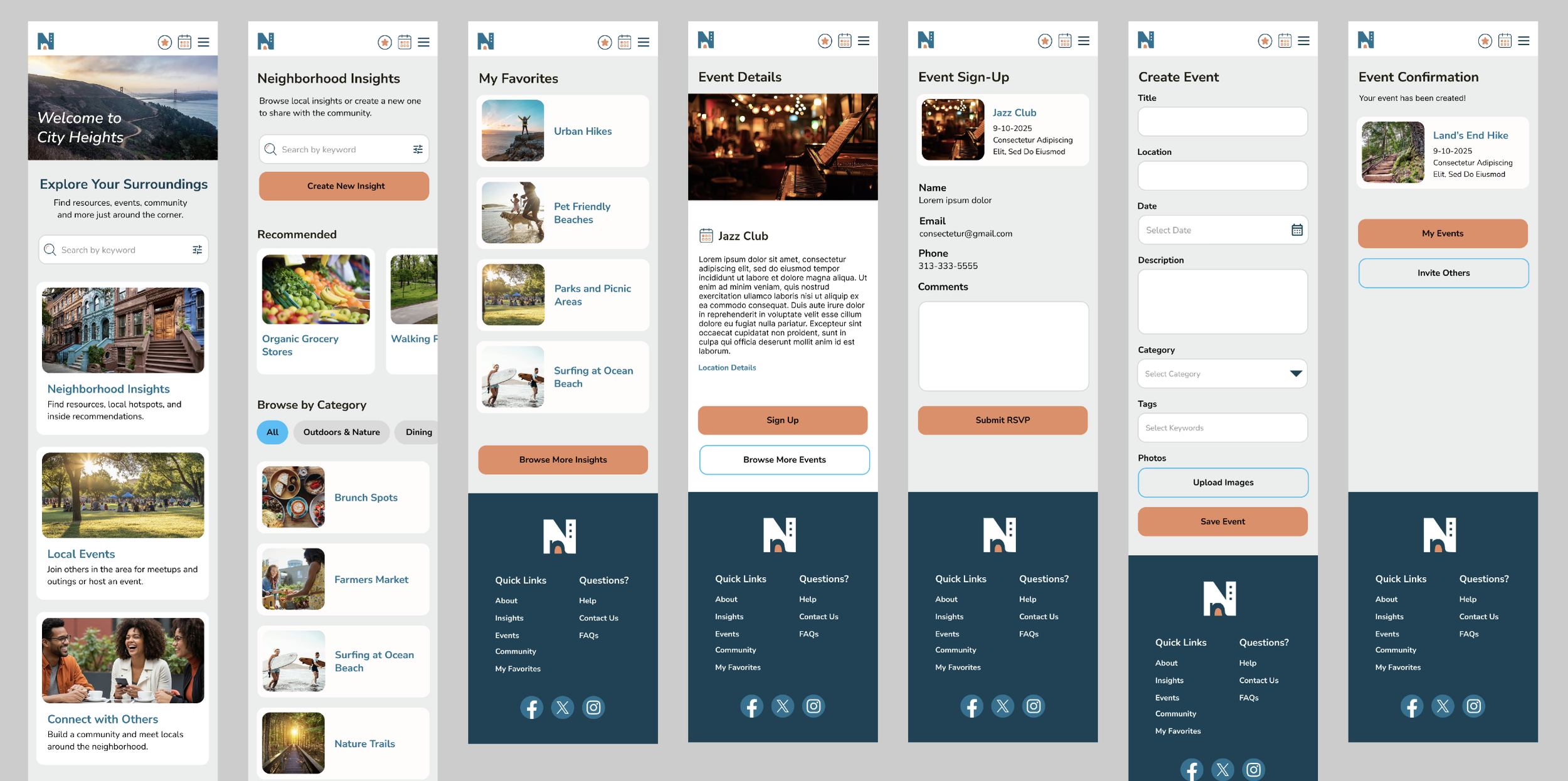
The branding was incorporated into the refined versions of the digital wireframes to create hi-fidelity designs.
Recap: After exploring various ideas through brainstorming, I moved into user flows and wireframes. From there, the product branding and components were created to help inform the hi-fidelity wireframes to prepare for user testing.
Prototyping & Testing
Using Figma, I prepared interactive prototypes of the hi-fidelity wireframes to test key task flows during usability testing in order to gain feedback about NeighborNook.
Usability Test Plan
Observe how users navigate through the Neighbor Nook website to achieve key tasks
Review the ease of use around the main navigation and overall content flow
Determine any areas of friction or confusion that users encounter when completing each task
Gather overall feedback from users to understand if Neighbor Nook would be an effective way to help adapt with relocating to a new neighborhood
Testing Results
Success Metrics Score
Task success rate: 100%
Completion time: 3 - 7 minutes to complete all tasks
User score: 4 out of 5 average score (1 being the lowest, 5 being the highest)
User reflection: Mentions they would likely use the website on their next move, found it to be easy to navigate, clean, well-designed, and intuitive for the most part.
Design Iterations
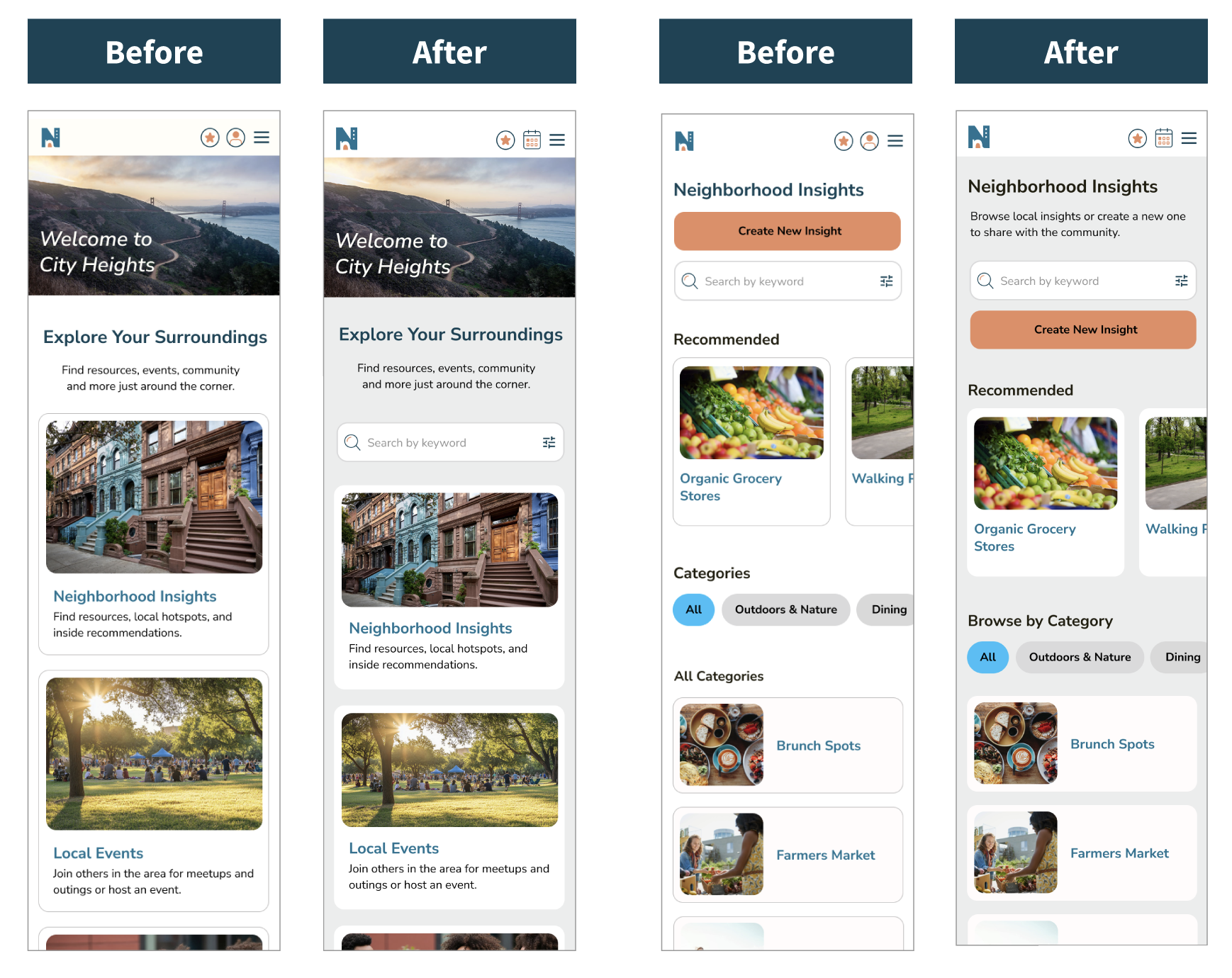
Homepage: Added a search bar; Shortened the section tiles by reducing image height.
Neighborhood Insights: Added a description to the top of the page; Moved the search bar to be above “Create New Insight”; Removed the header from the category section and reduced the space between filters and images; Added hover state to filters in prototype.
Recap: Through user testing, I was able to gather insightful feedback about whether the task flows and designs were intuitive to users. From there, I made informed decisions about the priority of the revisions to make to improve NeighborNook.
Future Opportunities
Conduct further iterative usability testing to improve user flows
Implement updates to event hosting based on user testing feedback
Build out Connect with Others section
Integrate a chat or messaging feature to better collaborate with other users